
Your international parcel has said "customs" or "held at customs" for days and nothing is moving. It is stressful, but a customs hold is a normal, routine stop for cross-border parcels — and it usually clears on its own. Here is what customs clearance means, how long it takes, whether you owe anything, and how to get it moving.
🛃 Watch a package clear customs
While your package sits in customs, Package Tracker keeps checking automatically and pushes an alert the moment it clears and moves again — free.

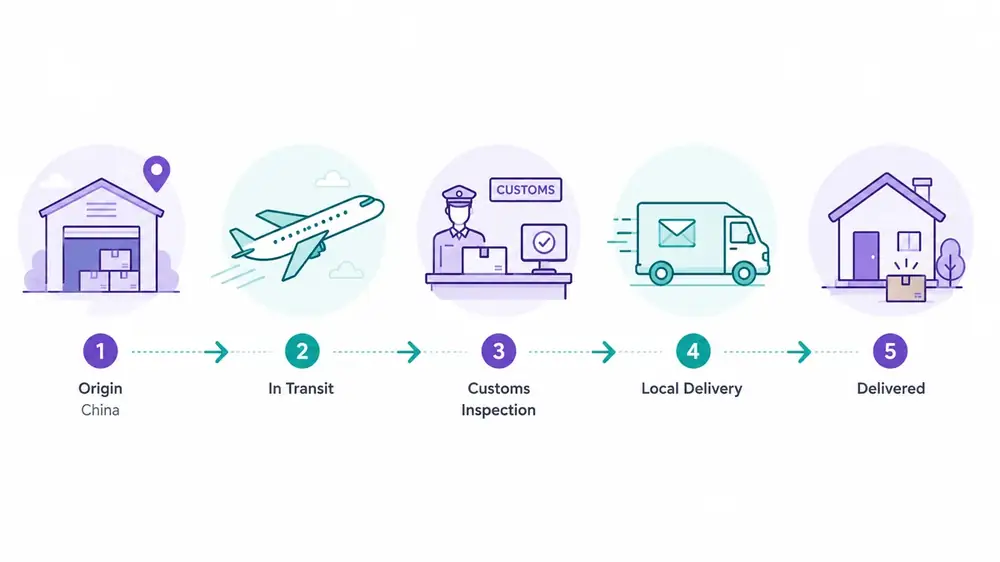
At Package Tracker we follow parcels across 1,700+ carriers, and customs is the single most common place a cross-border parcel goes quiet. The good news: most clear without you doing anything.
Follow your parcel through customs
Package Tracker re-checks your international parcel automatically and alerts you the moment it clears customs and moves again.
What does "customs clearance" mean?
Customs clearance is the check every international parcel goes through when it enters your country. Authorities such as U.S. Customs and Border Protection review the contents, value, and paperwork, decide if any duty or tax is due, and then release it to your local carrier for delivery. Your parcel is not lost — it is waiting in a queue or being reviewed.
How long does customs take?
Most parcels clear quickly, but it varies with the reason for the hold. Typical timeframes:
| Situation | Typical time in customs |
|---|---|
| Routine clearance | A few hours to 2 days |
| Busy period or backlog | 3 to 5 days |
| Held for inspection | Several days, sometimes 1 to 2 weeks |
| Duty or tax owed | Until you pay the charge and it is processed |
| Missing or incorrect paperwork | Until the sender provides the correct documents |
Why your package is stuck in customs
- Routine review. Random or standard checks — the most common reason, and it clears on its own.
- Duty or tax is due. The parcel is held until the charge is paid.
- Incomplete paperwork. A missing invoice or wrong customs declaration from the sender.
- Restricted contents. Certain goods need extra checks or documentation.
- Backlog. Peak shopping periods slow the whole queue.
Do I have to pay customs duties or tax?
Sometimes. Whether you owe duty or import tax depends on your country's threshold, the parcel's value, and the type of goods. If a charge is due, the carrier or customs will usually contact you with a way to pay — and the parcel stays held until it is paid. Be cautious of unexpected payment links; confirm charges through the official carrier or customs site, not a random text.
Get an alert the moment it clears
Package Tracker watches the customs step for you and pings you as soon as your parcel is released and back in transit.
What to do if it is stuck in customs too long
For a routine hold, the best move is to wait — contacting customs rarely speeds it up. If it has been more than about a week with no change, or you have had a payment or document request:
- Check for a charge or document request from the carrier — an unpaid fee is the most common cause of a long hold.
- Contact the carrier handling the parcel, not customs directly, with your tracking number.
- Ask the sender to supply any missing invoice or customs paperwork.
- If it is well overdue, open a dispute with the marketplace or seller under buyer protection.
This is common on cheap cross-border orders — see our guides for China Post, Cainiao, and 4PX, or if it is stuck elsewhere, package stuck in transit.
Key takeaways
- A customs hold is a normal, routine stop for international parcels.
- Routine clearance takes hours to 2 days; inspections or unpaid duty take longer.
- You may owe duty or tax; the parcel is held until it is paid.
- For a routine hold, wait; contact the carrier (not customs) if it drags past a week.
Frequently asked questions
It means your international parcel is being reviewed or is queued for clearance by customs authorities, who check the contents, value and paperwork before releasing it to your local carrier.
Routine clearance takes a few hours to 2 days. Busy periods, inspections, unpaid duty, or missing paperwork can extend it to several days or a week or more.
Common reasons are a routine review, duty or tax that must be paid, incomplete paperwork from the sender, restricted contents, or a seasonal backlog.
Sometimes. It depends on your country's threshold, the parcel value, and the goods. If a charge is due, the carrier or customs contacts you, and the parcel is held until you pay.
Usually not for a routine hold — contacting customs rarely helps. The fastest fix is to pay any charge promptly or have the sender supply missing paperwork.
Contact the carrier handling your parcel with your tracking number, not customs directly. For missing documents, ask the sender to provide them.
Almost never. A customs hold is a normal stop, and most parcels clear on their own. Only after a long hold with no updates should you treat it as a problem.
The carrier or customs will notify you, often by email, text, or a card. Confirm any charge through the official carrier or customs website, not an unexpected payment link.
Give it about a week for a routine hold. If there is no change after that, or you have a payment or document request, contact the carrier or open a dispute with the seller.




5 Comments